Choosing the right equipment can significantly impact your game, regardless of the sport. In pickleball, a sport that combines elements of tennis, badminton, and ping-pong, selecting the appropriate gear is crucial for performance. This guide focuses on providing you with essential tips for choosing your first pickleball paddle that may help you make an informed decision and enhance your playing experience.
1. Understand Your Play Style
Before diving into the features of a pickleball paddle, identify your play style. Do you prefer power or control? Answering this question will guide your choice. Power players should look for paddles that offer more weight and a larger hitting surface. Conversely, those leaning towards control might favor a lighter paddle for better maneuverability and touch.
Knowing your play style influences the weight and material of the paddle you choose. A heavier paddle amplifies power but may reduce speed in reaction shots. On the other hand, a lighter paddle improves control and quick hand movements, essential for volleys and dinks.
2. Consider Paddle Weight
Paddle weight plays a pivotal role in your gameplay and comfort. Paddles typically range from 6 to 14 ounces. A lighter paddle offers agility and ease of movement, suitable for players who value precision and finesse. However, it might not deliver the power some players seek.
In contrast, a heavier pickleball paddle enhances power behind shots, making it easier to drive the ball across the net. However, it can lead to fatigue more quickly, especially for those not accustomed to the weight. Balance is key. Try different weights to find what best suits your endurance and playing style.
3. Examine Pickleball Paddle Materials
Manufacturers produce pickleball paddles from various materials, each affecting the paddle’s performance. Common materials include wood, composite, and graphite. Wood paddles are durable and affordable but heavier and less responsive. Composite paddles offer a middle ground, providing a good balance of weight, control, and power. They come in various textures, which can influence ball spin.
Graphite paddles, though typically more expensive, are lightweight and offer excellent responsiveness, making them a favorite among players seeking precision and control. They allow for quick movements and finesse shots. Consider your budget and playing preferences when choosing between these materials.
4. Look Into Grip Size
A proper grip size ensures comfort and control, which reduces the risk of injuries. Paddle grips range from 4 to 4 ½ inches in circumference. To find the right size, measure from the middle crease of your palm to the tip of your ring finger. This measurement corresponds to a comfortable grip size for most players.
Selecting the correct grip size enhances paddle control and reduces the chance of elbow strain. If in doubt, choose a smaller size, as you can always add overgrip tape to increase the circumference. Ensure the grip feels natural and comfortable in your hand for the best playing experience.
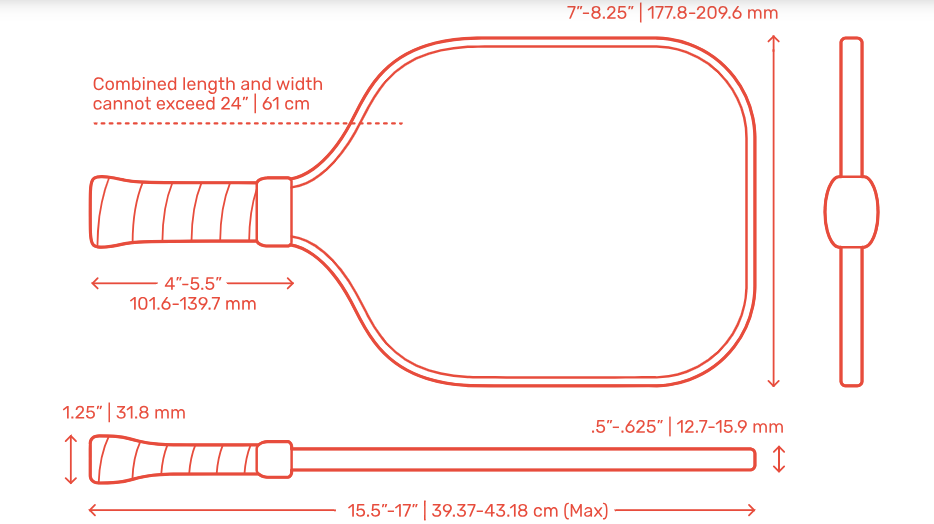 credits: https://www.dimensions.com/element/pickleball-paddle
5. Check Pickleball Paddle Core Materials
The core material of a pickleball paddle significantly affects its feel and sound. Nomex, aluminum, and polymer are the most common core materials. Nomex cores are hard and provide a powerful, popping sound on impact. They suit players looking for speed and power. Meanwhile, aluminum cores offer a lighter feel and good control, ideal for those prioritizing precision.
Polymer cores are the newest and most popular due to their blend of softness, durability, and noise reduction. They work well for players of all levels, offering a good balance between power and control. Assess your preferences and playing style to choose the core material that aligns with your needs.
6. Factor In Surface Texture
The surface texture of a pickleball paddle impacts ball spin and control. A rougher surface grips the ball better, allowing for more spin. This feature benefits players who use spin to their advantage in games. Smooth surfaces may not offer the same level of control over spin, but they can still provide excellent playability.
When considering texture, think about your playing strategies. Do you rely on spin shots? If so, a paddle with a textured surface might be the right choice. Always handle the paddle yourself to feel the texture and judge how it fits your game.
7. Seek Durability And Warranty
Durability is crucial when selecting a pickleball paddle. High-quality materials can withstand intense play and weather conditions. So, you should check the paddle’s construction and read reviews to ensure it has a reputation for longevity. Additionally, a warranty can offer peace of mind, as it covers manufacturing defects.
A durable paddle saves money in the long run because it won’t need frequent replacement. Consider this aspect carefully, especially if you plan to play often. A warranty reflects the manufacturer’s confidence in their product, making it a wise consideration in your decision.
Conclusion
Selecting your first pickleball paddle involves careful consideration of your play style, paddle weight, material, grip size, and core material. Balance these factors to find a paddle that complements your game and enhances your performance. Remember, the right pickleball paddle not only improves your play but also maximizes your enjoyment of the game. So, take your time to test different options and choose wisely to elevate your pickleball experience.